Inverter vs Non-Inverter Aircon: Is the Premium Worth It?
Inverter aircon worth the premium? 15-30% lower electricity, real payback calculations, noise and lifespan differences. Honest 2026 recommendation.
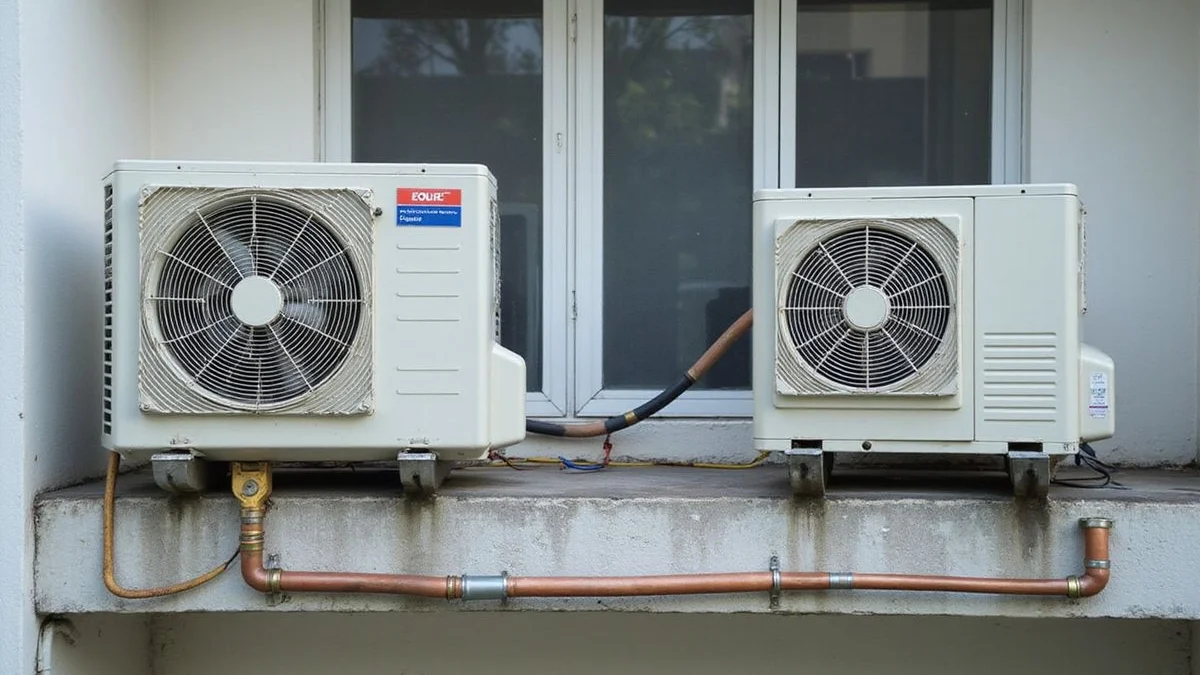
The inverter vs non-inverter aircon question comes down to a straightforward financial calculation. With air conditioning consuming up to 60% of a typical Singapore household utility bill, choosing the wrong compressor type can cost hundreds annually in wasted electricity or unnecessary upfront spending.
This guide lays out the technology difference, real savings figures, and clear recommendations based on 2026 NEA data and current electricity tariffs.
How the compressor technology differs
The core distinction lies in how the compressor operates inside the outdoor condenser unit.
Non-inverter (fixed-speed)
A fixed-speed compressor runs at full power or stays completely off. When the room hits the target temperature, the compressor shuts down. As the room warms again, it restarts at maximum capacity. This binary cycle creates 1-2°C temperature swings between each on-off cycle.
Every startup draws a large current surge. The result: audible noise spikes, inconsistent comfort, and higher cumulative electricity use.
Inverter (variable-speed)
An inverter compressor adjusts speed continuously from 30% to 110% of nominal capacity via a sophisticated PCB. It ramps fast to cool a hot room, then slows to a gentle idle to hold temperature.
Variable operation eliminates power spikes, maintains tighter temperature control (within 0.5°C), runs quieter, and uses significantly less electricity overall.

Real electricity savings in Singapore
These figures use the SP Group regulated residential tariff of 29.72 cents per kWh for Q2 2026.
Bedroom: 6 hours/night, 300 nights/year
| Config | Annual kWh | Annual cost | Over 10 years |
|---|---|---|---|
| 9000 BTU non-inverter 3-tick | 1,750 | S$490 | S$4,900 |
| 9000 BTU inverter 3-tick | 1,420 | S$395 | S$3,950 |
| 9000 BTU inverter 5-tick | 1,200 | S$335 | S$3,350 |
| Savings (non-inverter to 5-tick) | S$155/yr | S$1,550 |
Living room: 5 hours/day, 350 days/year
| Config | Annual kWh | Annual cost | Over 10 years |
|---|---|---|---|
| 18000 BTU non-inverter 3-tick | 3,200 | S$895 | S$8,950 |
| 18000 BTU inverter 5-tick | 2,100 | S$590 | S$5,900 |
| Savings | S$305/yr | S$3,050 |
The more hours you run the system, the faster an inverter pays for itself.
The upfront price premium
Inverter models cost S$150-S$400 more than equivalent non-inverter units within the same brand tier:
- 9000 BTU: S$150 to S$250 more
- 12000 BTU: S$180 to S$280 more
- 18000 BTU: S$220 to S$320 more
- 24000 BTU: S$280 to S$400 more
Payback periods by usage
| Usage level | Heavy use (6+ hrs) | Moderate (3-4 hrs) | Light (under 2 hrs) |
|---|---|---|---|
| 9000 BTU | 1-2 years | 2-3 years | 5-8 years |
| 12000 BTU | 1-2 years | 2-3 years | 5-8 years |
| 18000 BTU | 1 year | 2 years | 4-6 years |
For heavy-use spaces, the financial case for inverter is overwhelming. For light-use guest bedrooms, the payback stretches past the unit’s practical lifespan, making non-inverter a reasonable budget choice.
Differences beyond electricity
Comfort and temperature stability
Inverter holds within 0.5°C of your setting. Non-inverter swings 1-2°C between cycles, which many sleepers notice.
Noise levels
Inverter runs 2-5 dB quieter overall. The outdoor compressor produces a smooth, continuous sound rather than the bump of repeated start-stop cycles.
Dehumidification
Inverter excels because continuous low-speed operation maximizes moisture removal across the cold evaporator coil. Non-inverter dehumidifies well when running but stops removing moisture during off cycles. In Singapore’s 80-90% ambient humidity, this difference is meaningful.
Cooling speed
Inverter can push to 110% compressor speed to cool a hot room rapidly, then throttle back. Non-inverter has a fixed maximum output and takes longer to reach target from a high starting temperature.
Lifespan
Variable-speed compressors suffer less mechanical wear from reduced full-power starts. Field data suggests inverter compressors regularly surpass 10 years. Non-inverter units typically see 5-7 years from the compressor due to start-stop fatigue.
Where non-inverter still makes practical sense
Non-inverter remains valid for specific scenarios:
- Rental properties where the tenant pays electricity directly
- Light-use rooms like guest rooms or storage areas seeing minimal activity
- Tight budgets where saving S$200-S$300 upfront matters more than a 3-year payback
- Small enclosed spaces where cooling happens so fast that inverter advantages are minimal
When inverter is the clear winner
Install a 5-tick inverter for:
- Main bedrooms used every night
- Living and dining rooms the family occupies daily
- Rooms housing children or elderly residents where stable comfort matters
- Home offices used 8+ hours on workdays
- Condos or larger homes with already-high electricity bills
Inverter maintenance considerations
Day-to-day maintenance is identical. Chemical washes, filter cleaning, and drainage flushes follow the same procedures for both types.
The key difference: inverter PCB replacements cost more. A premium inverter PCB averages S$350-S$450 in 2026, versus S$150-S$250 for a non-inverter board. However, smart inverter units include built-in diagnostic error codes that make fault identification faster and more accurate.
By 2026, all major brands sell primarily inverter models in Singapore. Non-inverter is a shrinking category, mostly limited to budget window units and specific commercial applications.
Our recommendation
For the vast majority of Singapore households, a 4 or 5-tick inverter is the right choice. The extra S$200-S$300 pays back faster than almost any other home appliance upgrade.
For the remaining 20% of scenarios involving light-use rooms or strict budget constraints, non-inverter remains completely valid.
See our how to choose an aircon guide for the broader decision framework, or WhatsApp the iCare Aircon team for a recommendation tailored to your flat and rooms. Installation details are available on our aircon installation service page.
Part of the Aircon Installation guide hub
← Back to the main Aircon Installation pageQuestions Answered
Frequently Asked Questions
How much can I actually save with an inverter aircon?
For a heavily-used bedroom (6+ hours nightly), inverter typically saves S$180-280 per year in electricity vs a comparable non-inverter. For living rooms used 4-8 hours, S$250-400 per year. The payback on the price premium (S$150-300) is usually 1-2 years.
Are inverter aircons less reliable?
No, modern inverters are as reliable as non-inverters. Both technologies are mature. The concern from a decade ago about inverter PCB complexity is largely resolved — parts and diagnostics are standardised. Any difference in failure rates is too small to base a decision on.
Is an inverter worth it for a guest bedroom used rarely?
Probably not. If the aircon runs 30 nights a year, annual electricity savings from inverter are maybe S$30. The price premium takes 5-10 years to pay back — longer than the unit's effective life in light-use scenarios. Non-inverter is fine for occasional-use rooms.
 LICENSED
 About the Author
Mr Chong
Founder & Licensed HVAC Technician, iCare Aircon
Mr Chong founded iCare Aircon in Jurong after more than 10 years in Singapore’s HVAC industry. He started as an apprentice technician on HDB rooftops, moved into commercial chiller work, then built iCare Aircon to offer honest, diagnostics-first aircon servicing across Singapore. He holds a BCA-licensed contractor registration, NEA-certified refrigerant handler status, and personally trains every technician on the team. Mr Chong writes these guides to answer the same questions he hears on every job call.
Related Guides
How to Choose the Right Aircon for Your Singapore Home
Practical 2026 buyer's guide to choosing aircon in Singapore. BTU sizing by room, inverter payback, brand reliability, tick ratings, and installation costs.
Read guide →Best Aircon Brands for HDB and Condo Homes in Singapore
Daikin, Mitsubishi, Panasonic, Toshiba, LG compared for Singapore HDB and condo. Reliability, efficiency, parts availability, and real installation share data.
Read guide →Split vs Window vs Multi-Split Aircon: Choosing Your System
Split, window, or multi-split aircon for Singapore? Pros, cons, 2026 costs, and ideal use cases for each system type. How to match hardware to your flat.
Read guide →Ready for cool, clean air — today?
Chat with iCare Aircon on WhatsApp for same-day aircon service island-wide.