Aircon Not Cold: 5 Reasons Your Unit Is Blowing Warm Air
Aircon blowing warm air? The 5 most common causes: dirty filter, frozen coil, low refrigerant, thermostat fault, compressor issue. Quick checks before booking.
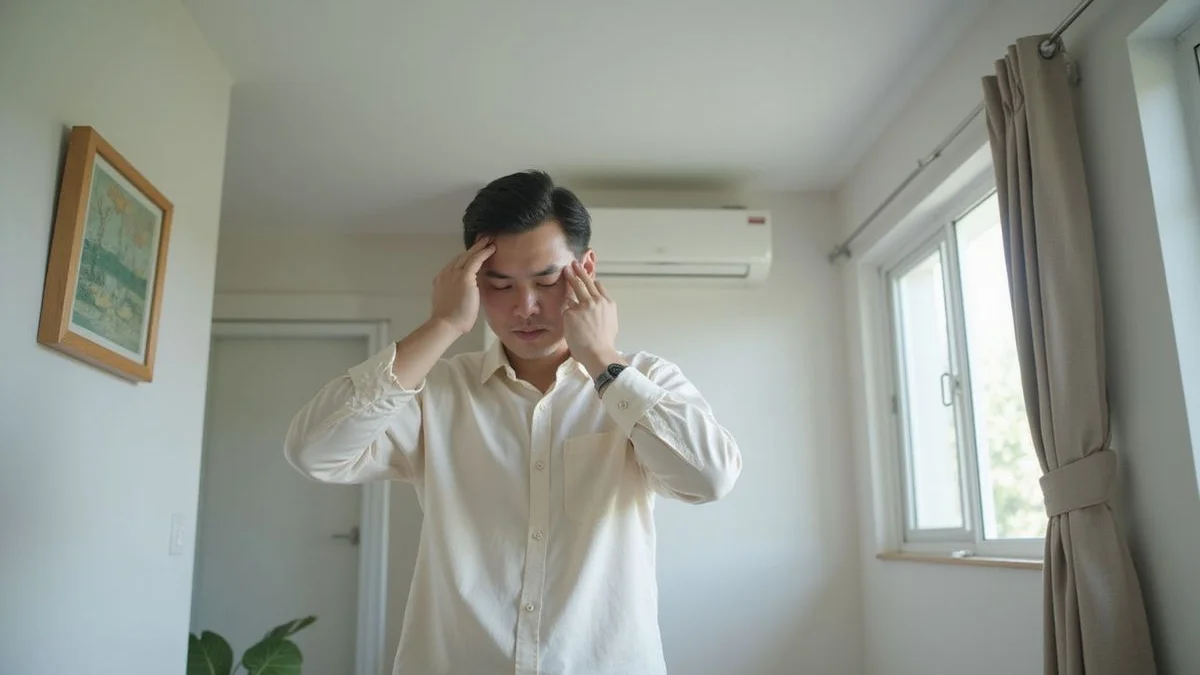
An aircon not cold blowing warm air is the top reason Singapore homeowners book emergency repairs. The good news: this is one of the easiest faults to diagnose because there are only five common causes. Two of them you can check yourself in minutes.

Here is the full list, ranked by frequency.
Cause 1: Dirty filter and blocked airflow (40% of cases)
A heavily soiled filter chokes airflow across the evaporator coil. As airflow drops, the coil temperature plummets and ice forms. That ice blocks the system further, creating a cycle where the unit blows room-temperature air or nothing at all.
5-minute DIY check:
- Switch the unit off completely.
- Pop the front cover and slide out the filter.
- A dense, matted grey colour indicates severe blockage.
- Rinse under running water and let it dry for 30 minutes.
- Leave the unit off for an hour to let any ice thaw.
- Reinstall the filter, power up, and test cooling.
If cooling returns, you found the root cause. Rinse the filter monthly and book standard servicing for the coil. Move to Cause 2 if cooling does not return after two hours of fan-only operation.
Cause 2: Frozen evaporator coil (15% of cases)
Same symptoms as a dirty filter, but the ice buildup runs deeper into the coil structure. Singapore’s 80%+ relative humidity accelerates freezing when airflow is even slightly restricted. The filter might look acceptably clean while underlying restrictions still cause frosting.
DIY check:
- Feel the copper pipe at the outdoor unit for ice or frost.
- Switch off for 2-4 hours to allow a complete thaw.
- Run fan-only mode afterward to dry the coil.
If cooling returns and stays consistent, the filter was the underlying cause. Ice forming again within a day or two means something deeper requires professional diagnosis.
Cause 3: Low refrigerant (20% of cases)
Refrigerant circulates in a sealed loop and never “runs out” naturally. A drop in pressure always indicates a physical leak, typically at a degraded flare joint or a manufacturing defect in the coil. Without sufficient gas, the system cannot absorb heat from your room.
Signs pointing specifically to low refrigerant:
- Ice on the copper pipes outside, not just the indoor coil.
- A hissing or fizzing sound near the unit.
- A gradual decline in cooling over several weeks.
Our policy: always locate and seal the leak before recharging. A top-up without a leak fix means the gas will escape again within months. See our repair service for the full procedure and pricing.
Cause 4: Thermostat or control fault (15% of cases)
The indoor sensor has either drifted or failed, causing the unit to think it has already reached the target temperature. You may notice the display reading 22°C while a desk thermometer shows 28°C.
The NEA recommends a 25°C setting for optimal efficiency. Every degree below 25 increases energy consumption by 6-10%.
DIY check:
- Set to 16°C on maximum fan speed.
- Wait 30 minutes.
- If cooling works at 16°C but fails at 24°C, the sensor has drifted and needs replacement.
Smart thermostats like Sensibo or Ambi Climate prevent these faults and can save up to 15% on energy usage by tracking actual room conditions.
Cause 5: Compressor or electrical fault (10% of cases)
The most serious category. The outdoor unit may fail to start at all. Common triggers include capacitor failure, a seized compressor, or a blown fuse. In Singapore’s climate, run capacitors typically last 8-12 years before degrading from heat and humidity exposure.
| Symptom | Probable Cause | Action |
|---|---|---|
| Outdoor unit runs briefly then stops | Compressor seized | Professional diagnosis immediately |
| Loud buzzing from outdoor unit | Capacitor failure | Replace capacitor |
| Repeated breaker tripping | Short circuit or blown fuse | Isolate power immediately |
Stop running the unit if you suspect an electrical issue. Switch off at the wall isolator and book urgent repair.
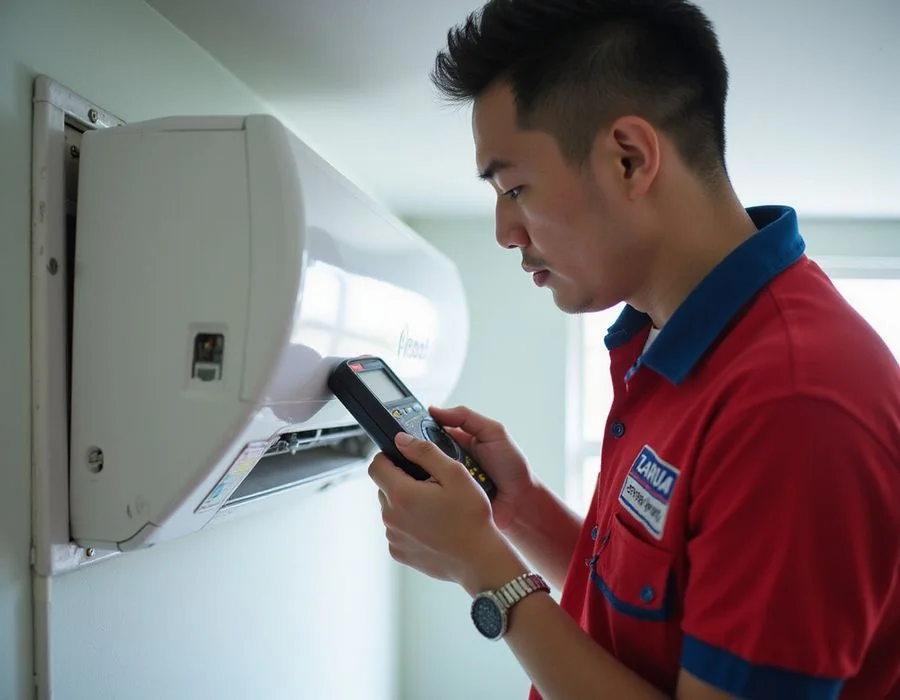
What our repair diagnosis covers
A comprehensive diagnosis for an aircon not cold blowing warm issue covers visual, thermal, and electrical inspection. The standard diagnostic fee is S$80, fully credited toward your repair bill if you proceed.
Steps:
- Initial interview: When did the problem start? What DIY steps were tried?
- Visual inspection: Indoor and outdoor units, filter condition, visible ice.
- Thermal measurement: Temperature delta between cold and warm copper pipes.
- Electrical check: Capacitor, contactor, and PCB signals.
- Pressure gauge: Connected only if refrigerant issues are suspected.
- Diagnosis and quote: Transparent cost estimate for the required fix.
When it is not a repair at all
Sometimes a system blowing warm air is actually a chemical wash issue rather than a mechanical failure. Severe coil fouling reduces heat transfer so dramatically that it perfectly mimics cooling loss.
Our iCare Aircon technicians will tell you immediately if your unit simply needs a deep clean instead of expensive replacement parts.
Average chemical wash costs:
- Non-dismantle chemical wash: S$80-S$100 per fan coil.
- Full dismantle chemical overhaul: S$130-S$180 per unit.
Act quickly
Running a non-cooling unit causes secondary damage: frozen coils, compressor strain, and PCB heat damage. Booking a diagnosis quickly usually results in a much cheaper fix. WhatsApp us a description of the fault and a photo of your outdoor unit for the fastest quote.
Part of the Aircon Repair guide hub
← Back to the main Aircon Repair pageQuestions Answered
Frequently Asked Questions
Can a dirty filter really stop my aircon from cooling?
Yes. A severely blocked filter restricts airflow enough that the evaporator coil starts freezing. Ice forms on the coil, further blocking airflow, and the unit blows warm air or drips water. It's the most common preventable cause of sudden cooling failure.
How do I know if it's low refrigerant?
Classic signs: ice forming on the copper pipes at the outdoor unit, hissing sound near the indoor unit, and warm-but-moving air indoors. A technician confirms with a manifold gauge reading — you can't diagnose refrigerant accurately without pressure measurement.
Should I keep running the aircon if it's not cold?
No. Running without cooling usually damages the compressor further, especially if the cause is low refrigerant or a frozen coil. Switch it off, let it return to room temperature, and book a diagnosis.
 LICENSED
 About the Author
Mr Chong
Founder & Licensed HVAC Technician, iCare Aircon
Mr Chong founded iCare Aircon in Jurong after more than 10 years in Singapore’s HVAC industry. He started as an apprentice technician on HDB rooftops, moved into commercial chiller work, then built iCare Aircon to offer honest, diagnostics-first aircon servicing across Singapore. He holds a BCA-licensed contractor registration, NEA-certified refrigerant handler status, and personally trains every technician on the team. Mr Chong writes these guides to answer the same questions he hears on every job call.
Related Guides
Aircon Leaking Water: Causes, Fixes, and When to Act
Aircon dripping water in your HDB or condo? 4 common causes: blocked drainage, dirty coil, installation tilt, frozen coil thaw. Same-day repair available.
Read guide →Noisy Aircon: Rattling, Humming, and Buzzing Sounds Explained
Aircon rattling, humming, or buzzing? What each sound means: loose parts, capacitor or fan motor faults, electrical issues. Severity tiers and repair costs.
Read guide →Decoding Aircon Blinking Lights and Error Codes in Singapore
Daikin, Mitsubishi, Panasonic, LG error codes decoded. Learn to read blink patterns, identify user-fixable faults, and know when to call a technician.
Read guide →Ready for cool, clean air — today?
Chat with iCare Aircon on WhatsApp for same-day aircon service island-wide.