5 Signs Your Aircon Needs a Chemical Wash
Mouldy smell, drainage slime, black spots on the blower, weak airflow after servicing? These symptoms mean your aircon needs a chemical wash, not standard service.
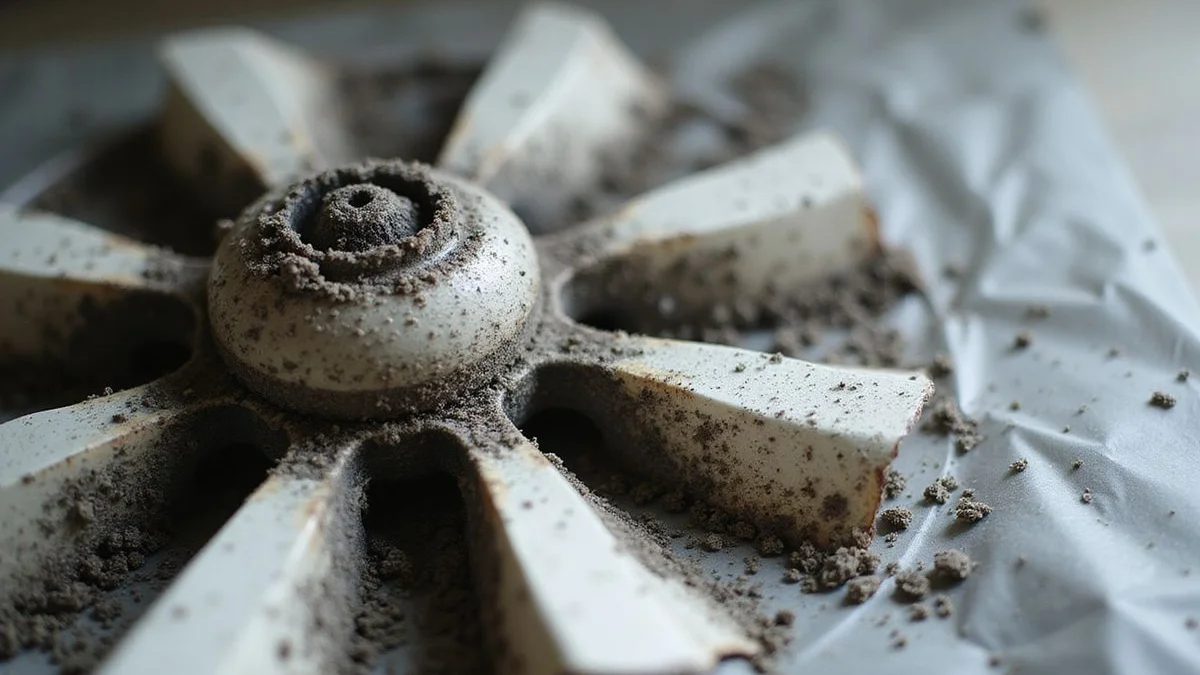
Standard aircon servicing works perfectly well until the contamination migrates past where surface tools can reach. Once biofilm, mould, and hardened grime embed themselves deep inside the coil, blower wheel, and drainage system, no amount of filter rinsing or in-place wiping will restore performance.
Recognising when your unit has crossed that threshold saves money and prevents escalating damage. These five signs indicate your aircon needs a chemical wash rather than another round of standard maintenance.
1. Mouldy or sour smell that persists
A musty or sour odour within the first 30 seconds of switching on the unit indicates severe internal bacterial growth. The smell resembles an old wet towel and fades slightly after a few minutes but always returns on the next startup.
This odour comes from biofilm: bacterial colonies growing in the damp sections of the fan coil. Singapore’s year-round humidity of 80 to 85% creates ideal conditions for these colonies. They spread to the back of the evaporator coil, inside the blower wheel barrel, and along the drainage tray where surface servicing tools cannot reach.
Standard maintenance will not eliminate deep-rooted biofilm. Only a complete dismantle-and-soak chemical treatment dissolves the bacterial matrix at the source.
2. Jelly-like slime at the drainage exit
Follow your aircon drainage pipe to where it exits the external wall. Jelly-like slime at this point confirms biofilm has heavily colonised your drainage pipework.
Additional warning signs at the drainage exit:
- Black or green residue around the hole
- Water trickling unevenly instead of flowing cleanly
- No water exiting at all despite the unit running
Left unchecked, this gelatinous buildup eventually blocks drainage entirely, causing water leaks from the indoor unit. In HDB flats across Woodlands and Jurong West, our team frequently traces indoor water damage back to this exact external warning sign. Addressing drainage slime early with a chemical flush prevents costly ceiling and flooring repairs.
3. Weak airflow returning weeks after standard servicing
When airflow drops back to pre-service levels just two to three weeks after a standard service visit, the coil and blower wheel are choked with hardened debris that in-place tools cannot remove.
Another clear indicator: filters getting visibly dirty within days of rinsing rather than weeks. That rapid re-accumulation consists of dust and biofilm particles shedding from deeper inside the unit onto the freshly cleaned filter.
A chemical overhaul strips away the hidden mass that standard servicing repeatedly fails to reach, restoring airflow to near-factory levels.
4. Visible black spots on the blower or coil
Black spots or fuzzy patches on exposed metal parts indicate active mould colonies like Aspergillus. You can often see grey-green discolouration by looking through the front vent or lifting the cover to peer at the blower barrel.
Surface wiping makes these spots disappear temporarily, but they return within two to three weeks because the root mycelium remains embedded in the internal fin structure. Spores continuously multiply in the dark, damp interior and spread back to the surface.
The chemical wash soak targets the root system. Dissolving the mycelium at its source breaks the recurring cycle and protects both the hardware and your indoor air quality.
5. More than 2 years since the last chemical wash
Even without visible symptoms, an aircon in Singapore needs a chemical wash every one to two years as preventive maintenance. Tropical conditions guarantee biofilm accumulates continuously behind the scenes, invisible until it reaches a critical threshold.
Preventive chemical cleaning costs the same as reactive cleaning but avoids secondary damage like drainage leaks, accelerating coil corrosion, and compressor strain from restricted airflow.
| Maintenance type | Average cost (Singapore) | What it addresses |
|---|---|---|
| Standard servicing | S$30 to S$60 | Surface clean only; biofilm remains |
| Chemical wash (non-dismantle) | S$70 to S$100 | Moderate buildup |
| Chemical overhaul (dismantle) | S$120 to S$250 | Heavy blockages and severe fouling |
| Compressor replacement | S$400+ | Total system failure from prolonged neglect |
The cost of delaying
Homeowners who wait more than three years between chemical washes almost always face an additional mechanical repair on top of the cleaning. The damage compounds:
- Biofilm hardens: Longer soak times needed, increasing labour cost
- Drainage blocks completely: Indoor water leaks damage ceilings, walls, and flooring
- Coil corrodes faster: Biofilm sitting on aluminium fins gradually eats the metal
- Air quality degrades: The blower circulates mould spores into your living space continuously
The industry rule of thumb: when repair and overhaul costs exceed 50% of a new unit’s price, replacement becomes the better financial decision. Regular chemical cleaning avoids reaching that point prematurely.
Indoor air quality: the health dimension
A neglected aircon circulates mould spores and allergens through the room every time the fan runs. For families in Singapore, where windows stay closed during aircon operation, this creates sustained exposure.
Common symptoms homeowners report before finally booking a deep clean:
- Persistent sore throat that clears during travel but returns at home
- Morning congestion that started during haze season and never resolved
- Worsening eczema or skin allergy flare-ups in children
- Cooking smells lingering in rooms longer than usual
A chemical wash does not cure underlying medical conditions, but it removes one significant silent contributor. For families with asthma, eczema, or very young children, a shorter 12-month chemical wash cycle provides meaningfully better protection.
Verify your unit’s condition
WhatsApp iCare Aircon a short video showing:
- Close-up of the front vent, zooming into the grille slots
- A few seconds of air flowing out to demonstrate the speed
- The external drainage exit point if accessible
Our team will tell you honestly whether you are in chemical wash territory or whether standard servicing is still sufficient. Book directly on our chemical wash service page.
Part of the Aircon Chemical Wash guide hub
← Back to the main Aircon Chemical Wash pageQuestions Answered
Frequently Asked Questions
How do I tell the difference between a servicing-level smell and a chemical-wash-level smell?
A servicing-level smell is a light dust or stale air scent that clears within 1 to 2 minutes of startup. A chemical-wash-level smell is mouldy, sour, or distinctly biological. It lingers, gets worse the longer the unit runs, and does not clear even after filter rinsing.
If my aircon cools fine but smells bad, do I still need chemical wash?
Usually yes. Biofilm on the coil and blower wheel produces the smell long before it blocks enough airflow for you to notice a cooling drop. Catching it at the smell stage means the chemical wash is a reset, not a rescue, keeping the unit on track.
Can black mould spots be cleaned without a chemical wash?
No. Surface wipes remove the visible fungus but not the root mycelium, which regrows within weeks. Chemical wash is the only domestic-grade intervention that neutralises mould throughout the entire component, not just the surface.
 LICENSED
 About the Author
Mr Chong
Founder & Licensed HVAC Technician, iCare Aircon
Mr Chong founded iCare Aircon in Jurong after more than 10 years in Singapore’s HVAC industry. He started as an apprentice technician on HDB rooftops, moved into commercial chiller work, then built iCare Aircon to offer honest, diagnostics-first aircon servicing across Singapore. He holds a BCA-licensed contractor registration, NEA-certified refrigerant handler status, and personally trains every technician on the team. Mr Chong writes these guides to answer the same questions he hears on every job call.
Related Guides
Smelly Aircon: What Each Odour Means and How to Fix It
Mouldy, sour, or burning aircon smell? What each odour means for your Singapore home and whether you need a chemical wash or urgent repair.
Read guide →Chemical Wash vs Normal Aircon Servicing: Which Do You Need?
Side-by-side comparison of standard aircon servicing vs chemical wash: scope, price, when each is appropriate. Clear decision rules for Singapore homes.
Read guide →What Is an Aircon Chemical Wash? Full Explanation
Aircon chemical wash explained: dismantle, soak in alkaline solution, high-pressure jet, reassemble. When Singapore homes need it and what the process involves.
Read guide →Ready for cool, clean air — today?
Chat with iCare Aircon on WhatsApp for same-day aircon service island-wide.