How Often Should You Schedule a Chemical Overhaul?
Chemical overhaul timing for Singapore's tropical climate: every 12-24 months for heavy use, up to 36 months for light use. Factors that shift the schedule.
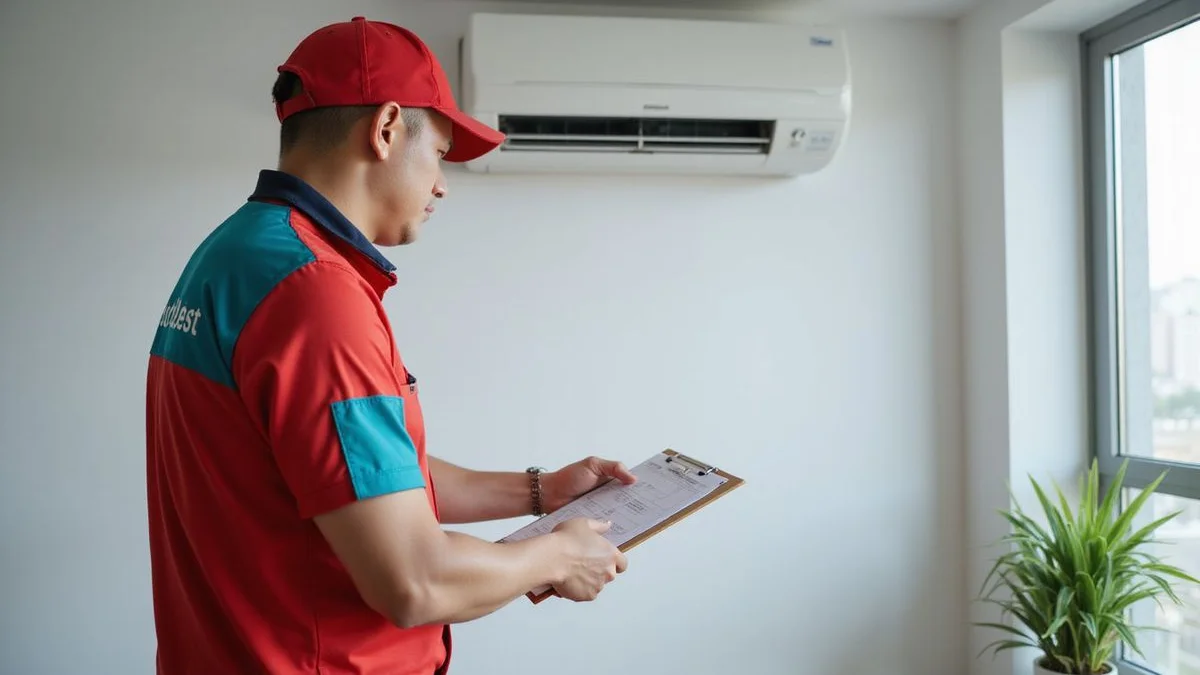
How often chemical overhaul aircon maintenance is needed depends heavily on your household habits and the environment your unit operates in. For a full breakdown of what the procedure involves and current pricing, see our main aircon chemical wash and overhaul page.
Singapore’s average 80% humidity guarantees that biofilm, a jelly-like bacterial sludge, develops inside every unit regardless of how diligently you maintain the filters. The question is not whether you need an overhaul, but how frequently.
Here is the baseline schedule:
- Heavy use (living room, 10+ hours per day): every 12 months
- Normal use (mixed, 4 to 8 hours per day): every 18 to 24 months
- Light use (bedroom only, under 4 hours per day): every 24 to 36 months
These intervals represent a flexible range. Understanding the variables that shift your timing helps you make cost-effective decisions.
Factors that shorten your overhaul cadence
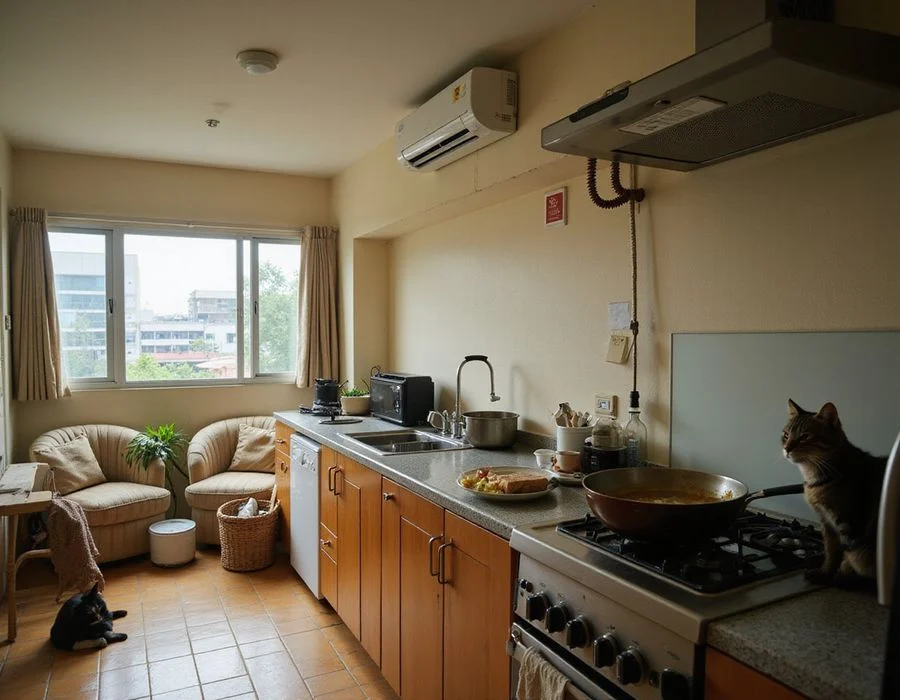
Open-concept kitchen fumes
Grease aerosols from open HDB kitchens bypass ductless range hoods and travel straight to your living room aircon. The filter becomes sticky and greasy rather than simply dusty. This cooking grease forms an insulating film on the evaporator coils that standard water servicing cannot cut through. Shorten your cadence to 12-18 months.
Indoor pets
Cat, dog, and rabbit dander particles typically measure under 5 microns. Standard aircon mesh filters only capture particles above 10 microns, meaning dander blows straight through and sticks to damp cooling coils and blower wheels. Multi-pet households should plan for an overhaul every 12-18 months.
Indoor smoking
Cigarette smoke and vape aerosols deposit tar-like residue on cooling coils. This sticky film attracts moisture and creates ideal conditions for harmful mould species like Aspergillus. Alkaline-based foaming chemicals are required because water alone cannot dissolve nicotine tar. Plan for annual overhauls in smoking households.
Construction dust exposure
Units near active MRT construction sites or major expressways ingest heavy loads of fine silica and cement dust. Combined with Singapore’s humidity, this dust absorbs condensation and hardens into a crust that water spraying cannot remove. Factor in 10-20% shorter intervals.
Extended daily run hours
A bedroom unit running 16 hours daily accumulates biofilm roughly twice as fast as one running 8 hours. Continuous operation prevents internal components from drying out, which accelerates bacterial colonization and sudden drainage blockages.
Factors that lengthen your cadence
Light, intermittent use
A unit running only 6-7 hours per night can stretch to 3 years between overhauls if windows stay closed and indoor cooking is minimal. The evaporator coil dries out completely during the day, removing the constant moisture that feeds mould growth. Quarterly standard servicing remains important to clear surface dust.
Clean living environment
Homes with no pets, no smokers, and minimal cooking pull less debris into the system. Standalone HEPA air purifiers capture particles down to 0.3 microns before they reach the aircon intake. Combined with monthly filter rinsing, these habits can extend your overhaul cadence to a full 3 years.
Thorough previous overhaul
Starting from a perfectly clean slate extends the time before biofilm re-establishes. A high-pressure drainage flush exceeding 100 PSI forces bacteria to restart their growth cycle from scratch. A genuinely thorough professional cleaning allows the next overhaul to stretch slightly further.
How overhaul fits with standard servicing
Chemical overhaul does not replace routine servicing. The two work together on complementary schedules.
| Month | Service |
|---|---|
| 0, 3, 6, 9 | Standard servicing (quarterly for heavy-use units) |
| 12 or 18 | Chemical overhaul replaces that quarter’s standard service |
| Repeat | Standard servicing continues, then overhaul again at the next milestone |
Standard servicing clears accessible surfaces. Overhaul periodically resets the deep, hidden components that vacuuming and wiping cannot reach. Skipping either step causes the other to become progressively less effective. Energy studies show unmaintained aircons experience a 5-10% efficiency drop annually.
The “just had servicing, why overhaul?” question
This is the most common source of homeowner frustration. You pay for standard servicing, then hear a recommendation for chemical overhaul shortly after. The explanation is straightforward: standard servicing cleans parts the technician can easily reach without disassembly. When visible surfaces are clean but the unit still smells or drips, the problem sits deep in the drainage pan or behind the coil.
Our iCare Aircon technicians note the specific limitation on-site and explain exactly where standard cleaning stops. We never recommend an overhaul when standard servicing is genuinely sufficient.
Scheduling your next overhaul
If more than 18 months have passed since your last chemical wash, acting now saves you from more expensive intervention later. WhatsApp a photo of your unit and its current condition. Our specialists will assess whether you are on schedule or overdue, factoring in your specific household patterns to recommend the exact right timing.
Part of the Aircon Chemical Wash guide hub
← Back to the main Aircon Chemical Wash pageQuestions Answered
Frequently Asked Questions
Can I skip chemical overhaul if I service regularly?
No. Standard servicing cleans accessible surfaces, but biofilm and oxidation still build up inside and need periodic deep treatment. Skipping chemical overhaul entirely is the #1 cause of mid-life aircon failures we see in Singapore homes.
Does heavy usage mean overhaul every year?
For 12+ hours daily or multi-resident heavy households, yes — annual overhaul is justified. Normal family use (4-8 hours daily) is typically every 18-24 months. Light use (bedroom-only, under 4 hours) can stretch to 30-36 months.
Is 3 years between overhauls too long?
For light bedroom-only use, 3 years can be fine. For heavy use, 3 years usually means visible mould, sticky drainage, and efficiency loss that the overhaul will only partly recover. We recommend not exceeding 2 years for regularly-used units.
 LICENSED
 About the Author
Mr Chong
Founder & Licensed HVAC Technician, iCare Aircon
Mr Chong founded iCare Aircon in Jurong after more than 10 years in Singapore’s HVAC industry. He started as an apprentice technician on HDB rooftops, moved into commercial chiller work, then built iCare Aircon to offer honest, diagnostics-first aircon servicing across Singapore. He holds a BCA-licensed contractor registration, NEA-certified refrigerant handler status, and personally trains every technician on the team. Mr Chong writes these guides to answer the same questions he hears on every job call.
Related Guides
What Is an Aircon Chemical Wash? Full Explanation
Aircon chemical wash explained: dismantle, soak in alkaline solution, high-pressure jet, reassemble. When Singapore homes need it and what the process involves.
Read guide →How Often Should You Service Your Aircon in Singapore?
The right aircon servicing frequency for Singapore's tropical climate. When HDB, condo, and heavy-use units need a professional visit and why.
Read guide →Chemical Overhaul for Aircons Over 10 Years Old
Is your 10-year-old aircon worth overhauling? Decision framework for Singapore homes: when chemical overhaul pays off and when replacement is smarter.
Read guide →Ready for cool, clean air — today?
Chat with iCare Aircon on WhatsApp for same-day aircon service island-wide.