Chemical Overhaul for Aircons Over 10 Years Old
Is your 10-year-old aircon worth overhauling? Decision framework for Singapore homes: when chemical overhaul pays off and when replacement is smarter.
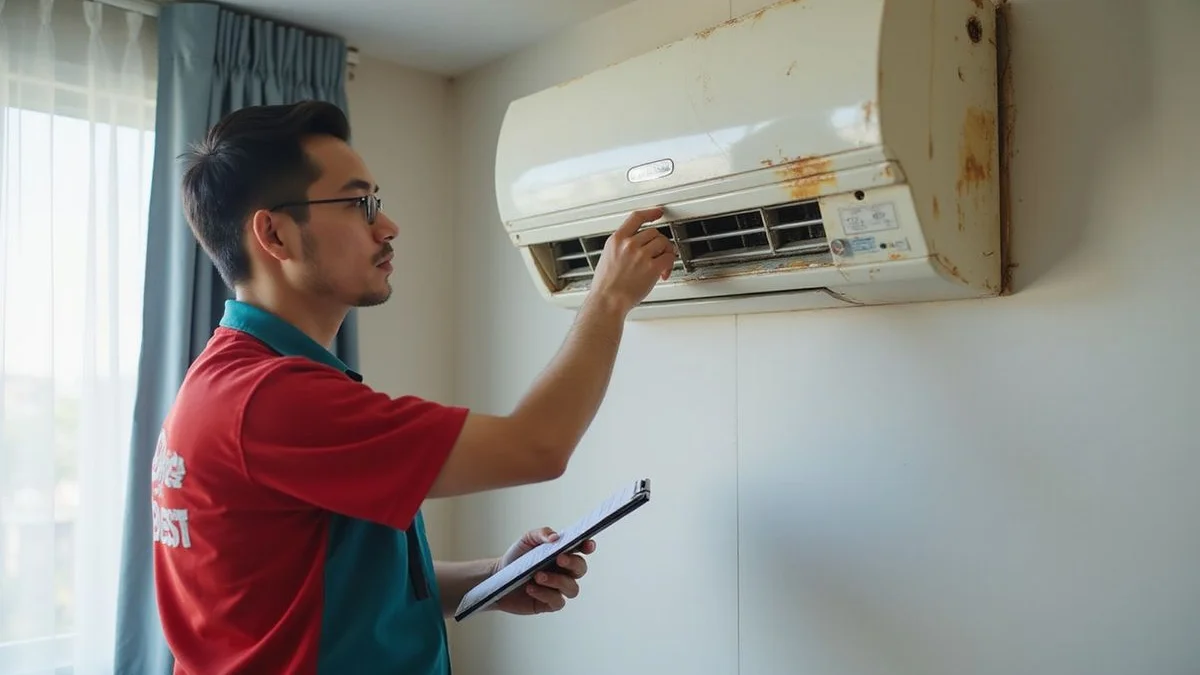
An air conditioning unit that has been running for a decade sits at a financial crossroads. After roughly 15,000 compressor cycles in Singapore’s relentless humidity, the internal coils carry thick layers of biofilm that standard servicing cannot touch. Before committing to a full system replacement, many homeowners should first consider an aircon chemical wash and overhaul to determine how much life remains in the existing system.
The choice between restoration and replacement affects your budget for years. This framework helps you decide whether a chemical overhaul old aircon service is genuinely worth the investment.
What chemical overhaul recovers
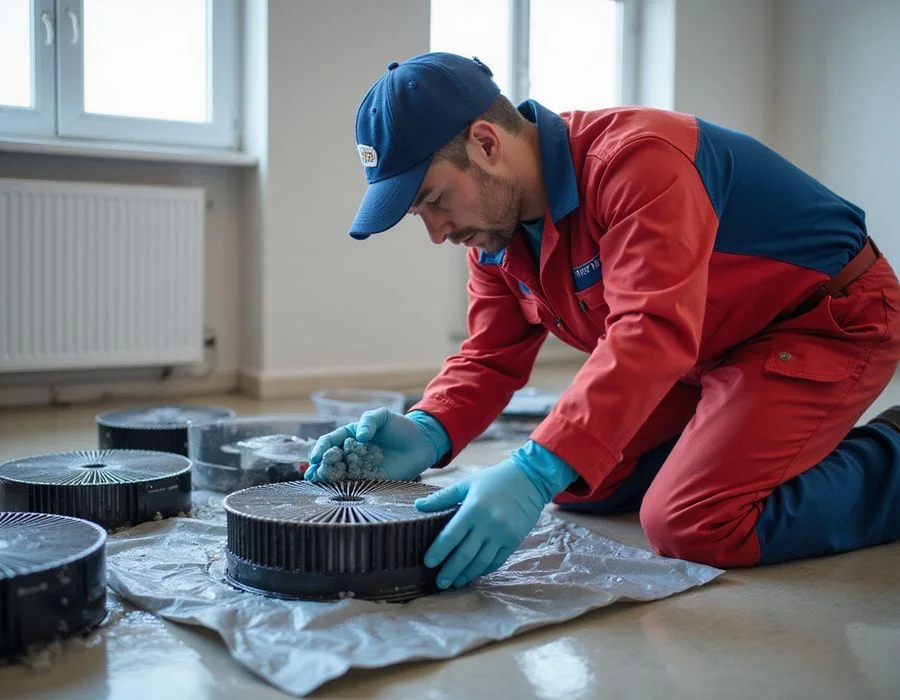
A properly executed deep clean restores lost performance that accumulates gradually over years of operation.
- Cooling capacity: A thin dust layer on evaporator coils reduces heat transfer by up to 15%. Chemical treatment strips this insulating film.
- Energy efficiency: The compressor reaches target temperature faster after cleaning, lowering power consumption by up to 30%.
- Airflow: Clearing the blower wheel restores original wind speed.
- Drainage function: Chemical flushing dissolves the jelly-like slime causing frequent water leaks.
- Indoor air quality: Deep treatment eradicates mould spores breeding inside the damp interior.
What chemical overhaul cannot recover
Cleaning solves airflow and contamination problems but cannot reverse physical deterioration.
- Compressor wear: Thousands of running hours cause irreversible mechanical friction.
- Refrigerant phase-out: Older R22 systems face strict NEA restrictions. No cleaning upgrades the gas type.
- Fatigued electronics: PCBs and capacitors degrade over time. Replacement PCBs for premium brands cost S$200-S$380.
- Efficiency ceiling: A cleaned 10-year-old unit still uses more power than a modern 5-tick inverter.
- Physical damage: Bent aluminium fins and cracked drainage pans need part replacements.
The three-question decision framework
Question 1: What refrigerant does it use?
Check the outdoor condenser nameplate before doing anything else.
- R32 or R410A: Continue to Question 2. These refrigerants are fully supported and economical to maintain.
- R22: Lean strongly toward replacement. The NEA has banned R22 imports, and top-up costs now exceed S$120 per session. Future leaks become prohibitively expensive to fix.
Question 2: How is the compressor behaving?
- Healthy: Smooth startup, consistent cooling, normal running current measured by clamp meter. Continue to Question 3.
- Failing: Hard startup, intermittent cooling loss, frequent electrical tripping, or high amp draws. An overhaul cannot save a dying compressor. Lean toward replacement.
Question 3: What is the total restoration cost?
- Overhaul alone: Usually worth it. A chemical overhaul on a healthy unit provides 3-5 more years of reliable service.
- Overhaul plus one repair: Marginal value. Adding a S$250 PCB or drainage pan replacement makes the financial case weaker.
- Overhaul plus multiple repairs: Lean toward replacement. You have hit the 40-50% threshold where buying new makes better financial sense.
Applying the 50% rule
Replace the air conditioner if the total restoration cost exceeds 50% of a new installation. This is a standard HVAC industry threshold that our technicians apply daily across HDB flats and condominiums in Singapore.
| Installation Type | New Unit Cost (S$) | 50% Threshold (S$) |
|---|---|---|
| System 1 (Single Room) | S$1,050 - S$1,700 | S$525 - S$850 |
| System 3 (Standard HDB) | S$2,800 - S$3,600 | S$1,400 - S$1,800 |
Premium brands like Daikin and Mitsubishi carry higher replacement costs, giving you more room to justify repairing a high-end system.
When overhaul is clearly right
- The compressor sounds quiet and draws normal current.
- The system uses R32 or R410A refrigerant.
- No major electrical components show signs of failure.
- The unit sits in a low-use area like a guest bedroom or home office.
- You own a premium brand where a new equivalent costs significantly more than mid-tier alternatives.
When replacement is clearly right
- Obsolete refrigerant: The unit uses R22 gas, which is restricted and increasingly expensive.
- Compressor failure signs: High amp draws indicate the motor will fail soon.
- Primary-use areas: Master bedrooms and living rooms need total cooling reliability.
- Energy savings: Upgrading to a modern 5-tick system saves a typical household roughly S$260 annually.
- Government incentives: The 2026 NEA Climate Voucher (S$400 for eligible HDB households) makes 5-tick upgrades more affordable.
- Upcoming renovations: You want consistent aesthetics and concealed piping during a renovation.
The middle path: overhaul now, replace in 2-3 years
Buying time is a perfectly valid strategy. A chemical overhaul keeps systems running while you save for a planned upgrade. This approach works well when:
- You are not ready to spend thousands on a multi-split replacement this year.
- Immediate cash flow better supports a smaller overhaul bill.
- You plan to synchronize new installation with an upcoming BTO handover or renovation.
However, overhauling the same aged unit twice offers poor returns. A second major chemical wash on a 12-year-old machine rarely justifies the expense compared to permanent replacement.
What iCare Aircon does on-site
Our BCA-registered technicians never guess when evaluating aging equipment. The on-site inspection provides objective data for your decision.
- Check refrigerant type: Read the outdoor condenser nameplate to verify the gas category.
- Assess compressor condition: Listen for abnormal rattling and measure running amps against factory specifications.
- Inspect internal components: Check for coil corrosion, fin damage, and drainage blockages.
- Calculate exact costs: You receive transparent figures for both restoration and potential replacement.
The final choice stays entirely in your hands based on the data we provide. We do not earn commissions by pushing unnecessary replacements. Contact our team via WhatsApp to book a thorough assessment.
Part of the Aircon Chemical Wash guide hub
← Back to the main Aircon Chemical Wash pageQuestions Answered
Frequently Asked Questions
Is a 10-year-old aircon worth overhauling?
Often yes, if the compressor is healthy and the refrigerant is R32 or R410A. If it's R22 (phased out in Singapore), replacement usually wins on total cost of ownership over the next 3-5 years.
Can chemical overhaul restore full cooling to an old unit?
It can restore most of the original capacity lost to coil fouling — which is usually 20-40% of the total cooling loss. What it can't reverse is compressor wear, refrigerant phase-out, or fatigued electronics.
Should I overhaul or just replace an R22 aircon?
Usually replace. R22 is phased out in Singapore — top-up refrigerant is expensive and getting harder to source. The overhaul cost plus future top-up costs often exceeds what a new R32 system would cost over 5 years.
 LICENSED
 About the Author
Mr Chong
Founder & Licensed HVAC Technician, iCare Aircon
Mr Chong founded iCare Aircon in Jurong after more than 10 years in Singapore’s HVAC industry. He started as an apprentice technician on HDB rooftops, moved into commercial chiller work, then built iCare Aircon to offer honest, diagnostics-first aircon servicing across Singapore. He holds a BCA-licensed contractor registration, NEA-certified refrigerant handler status, and personally trains every technician on the team. Mr Chong writes these guides to answer the same questions he hears on every job call.
Related Guides
Aircon Repair vs Replacement: Making the Smart Decision
Repair or replace your aircon? The 50% rule, age thresholds, R22 phase-out impact, and when a new unit saves money long-term. 2026 Singapore prices.
Read guide →How to Choose the Right Aircon for Your Singapore Home
Practical 2026 buyer's guide to choosing aircon in Singapore. BTU sizing by room, inverter payback, brand reliability, tick ratings, and installation costs.
Read guide →Chemical Wash vs Normal Aircon Servicing: Which Do You Need?
Side-by-side comparison of standard aircon servicing vs chemical wash: scope, price, when each is appropriate. Clear decision rules for Singapore homes.
Read guide →Ready for cool, clean air — today?
Chat with iCare Aircon on WhatsApp for same-day aircon service island-wide.